
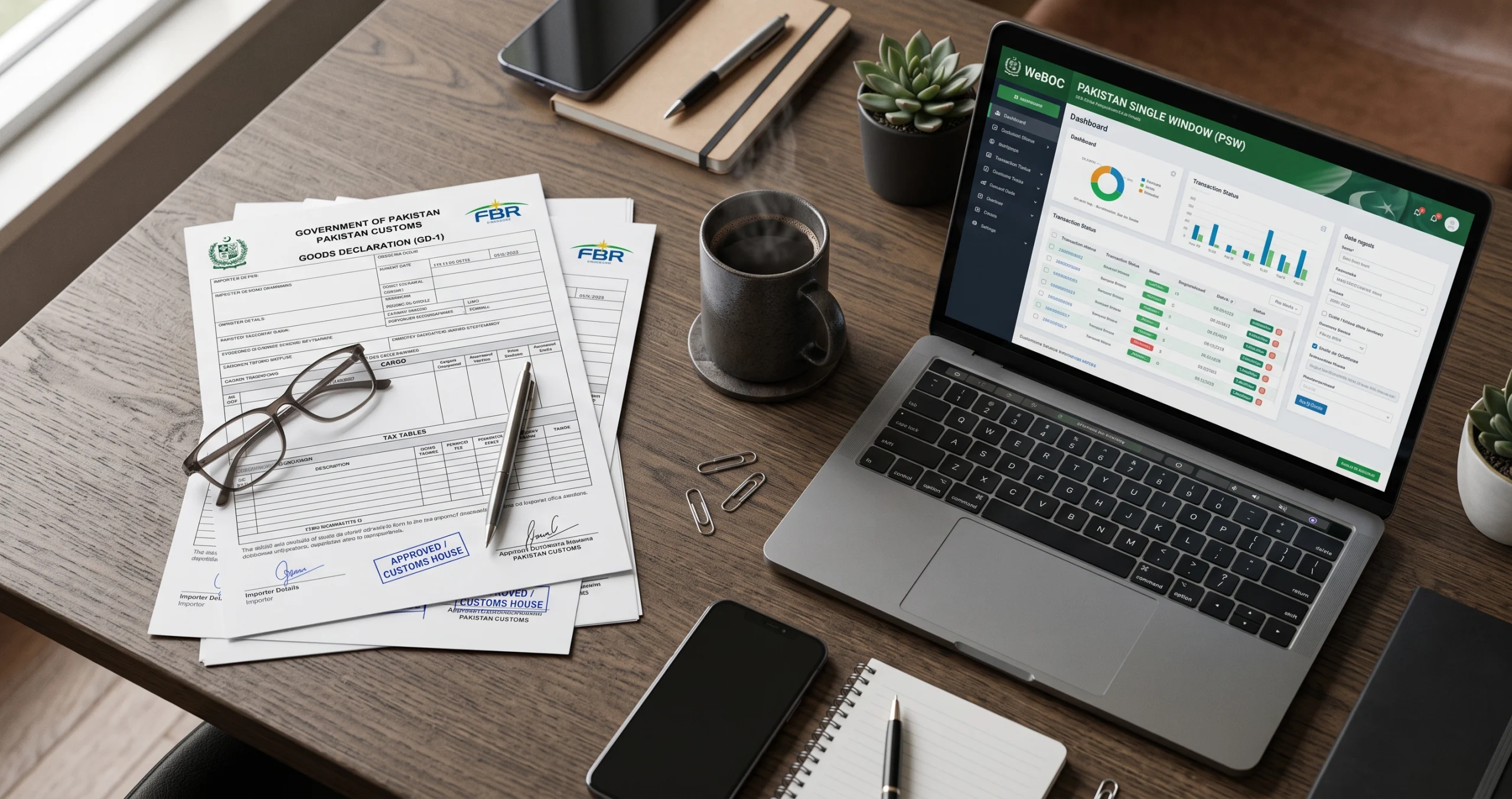
Starting an import business in Pakistan can be an incredibly lucrative venture, especially if you deal with high-demand commodities like electronics, machinery, and scrap metals. However, before you can bring your first commercial container to Karachi Port or Port Qasim, one of the most critical hurdles you must navigate is understanding the legal framework. Specifically, new traders frequently ask about the import license requirements Pakistan mandates for clearing foreign goods.
In this comprehensive pillar article, we will break down the exact import business requirements Pakistan imposes on traders. We will clarify whether you actually need a traditional “import license,” walk you through the requirements to become an importer in Pakistan, and detail the entire WeBOC registration process. As industry experts at AM Traders, we aim to make international B2B trading as seamless as possible for our network.
Do You Need an Import License in Pakistan?
Historically, the government issued a specific, physical document known as an “Import License” to traders. Today, however, the system has evolved. For standard commercial goods, you do not need a document titled “Import License.”
Instead, the modern equivalent of an import license is being registered as an active taxpayer with the Federal Board of Revenue (FBR) and possessing an active WeBOC (Web Based One Customs) or PSW (Pakistan Single Window) ID. Once your business is registered with customs through these digital portals, you hold the legal authority to import goods.
Therefore, when people search for the requirements for import license in Pakistan, they are actually looking for the steps to acquire commercial importer status and WeBOC registration.
Import License Requirements in Pakistan
To start importing, you must meet specific criteria set by the FBR and Pakistan Customs. The requirements for commercial importers in Pakistan differ slightly from those for industrial importers (manufacturers who import raw materials for their own factories).
For a commercial importer (someone who imports goods to sell them for profit in the local market), the primary requirements include:
- A registered business entity (Sole Proprietorship, Partnership, or Private Limited Company).
- A valid National Tax Number (NTN).
- Registration with the Sales Tax department (STRN).
- Membership in a recognized Chamber of Commerce and Industry (CCI) in Pakistan.
- Active bank accounts matching the business name.
Meeting these commercial importer requirements Pakistan has set is the foundational step before you apply for customs clearance access.
Documents Required for Importer Registration
Preparing your paperwork in advance will save you weeks of delays. The documents required for importer registration are strict, and any discrepancy can lead to application rejection. Here is a definitive list of the Pakistan importer registration documents you must gather:
- Business Registration Proof: Partnership deed, Incorporation Certificate from SECP, or simply a letterhead for Sole Proprietors.
- NTN Certificate: Showing your business as an active taxpayer.
- Sales Tax Registration Certificate (STRN).
- Bank Maintenance Certificate: Issued by your bank, confirming your account details.
- Chamber of Commerce Certificate: Valid membership certificate from your local Chamber of Commerce.
- CNIC Copies: Computerized National Identity Cards of all directors or partners.
- Premises Ownership or Rent Agreement: Proof of your registered business address.
- Utility Bills: Recent electricity or gas bills of the registered office.
Gathering these documents required for import license Pakistan is non-negotiable for anyone looking to import commercially.
How to Register as an Importer in Pakistan
Once you have your Pakistan import documentation requirements fulfilled, the actual registration process involves a few sequential steps:
- Register with FBR: Obtain your NTN and STRN through the IRIS portal.
- Open a Business Bank Account: Use your FBR documents to open an account in your business’s name.
- Join the Chamber of Commerce: Submit your bank certificate and FBR documents to get a membership.
- Apply for PSW/WeBOC: With all the above completed, apply for the Pakistan Single Window (PSW) subscription, which is replacing the older WeBOC system.
WeBOC Registration for Importers
The Web Based One Customs (WeBOC) system is the digital backbone of Pakistan’s import and export infrastructure. Understanding the WeBOC registration requirements Pakistan mandates is vital.
To register, you previously had to visit the customs office for physical verification. Today, the PSW portal has digitized much of this. However, the core WeBOC importer registration documents remain the same as listed above. You will need to submit biometric verification (usually through NADRA e-Sahulat centers) to activate your ID. Once your WeBOC/PSW ID is active, you are officially recognized as a commercial importer.
Import License Fee in Pakistan
While there is no “Import License” fee per se, there are costs associated with becoming a registered importer:
- FBR Registration: Free (if done yourself) or nominal consultant fees.
- Chamber of Commerce Membership: Varies by city, typically between PKR 10,000 to PKR 25,000 annually.
- PSW Subscription Fee: The government charges a small subscription fee for the Pakistan Single Window system (usually around PKR 500).
- Customs Agent Fees: Hiring a clearing agent to handle your WeBOC operations will incur separate charges per shipment.
Pakistan Import Procedure Step by Step
Once you are a registered importer, you can begin international trade. Here is a brief overview of the import procedure:
- Supplier Negotiation: Agree on terms and pricing with your overseas supplier.
- Proforma Invoice: Receive the Proforma Invoice and arrange payment (via Letter of Credit, TT, etc.).
- Shipping: The supplier ships the goods and provides the documents required to import goods in Pakistan (Bill of Lading, Commercial Invoice, Packing List, Certificate of Origin).
- Filing the IGM: The shipping line files the Import General Manifest at the port.
- Goods Declaration (GD): Your clearing agent files the GD through WeBOC/PSW.
- Assessment & Payment: Customs assesses the duties and taxes, which you pay through your bank.
- Clearance: Goods are physically examined and then released to your transport.
Customs Clearance Requirements
Clearing goods at the port has its own set of rules. The import customs requirements Pakistan enforces are designed to prevent smuggling and ensure correct tax collection. For every shipment, you must provide:
- The original Bill of Lading.
- Original Commercial Invoice and Packing List.
- E-Form or Weboc Bank ID for financial tracking.
- Pre-Shipment Inspection (PSI) certificate (if applicable).
Adhering to these customs registration requirements Pakistan mandates ensures your containers are not held up in demurrage.
Can You Import Without an Import License?
A common question is whether you can bypass these commercial registrations. If you are importing items for personal use via courier services (like DHL or FedEx), and the value is small, you do not need to be a registered commercial importer. The courier company clears it on your behalf using your personal CNIC.
However, for commercial sea freight or large quantities meant for resale, you absolutely cannot import without following the commercial importer registration process.
Special Import Licenses for Regulated Products
While standard goods only require WeBOC registration, certain restricted items require explicit permission or a Non-Objection Certificate (NOC) from specific ministries. This is the closest thing to a traditional “Import License” today.
- Pharmaceuticals & Medical Devices: Require licenses from DRAP.
- Chemicals: Require NOCs from the Ministry of Climate Change or relevant authorities.
- Telecommunication Equipment: Requires PTA approval.
Scrap Metal Import Requirements in Pakistan
When dealing with the import of scrap metals, electronics, and Malaysia Lots, the documentation becomes even more specific. Due to environmental and safety concerns, importing scrap requires a Pre-Shipment Inspection (PSI) Certificate from an internationally recognized inspection agency (like SGS) in the country of origin. This certificate proves that the scrap is free from hazardous materials, explosives, and radioactive elements.
At AM Traders, we navigate these complexities daily. Whether sourcing high-grade copper scrap from Malaysia or dealing with large electronic waste lots, ensuring compliance with both local and international shipping laws is the key to our reliable supply chain.
Frequently Asked Questions
Q: Do I need a specific import license to import from China or Malaysia?
A: No, the general requirements for commercial importers in Pakistan apply to all countries. Your WeBOC/PSW ID is valid for imports globally.
Q: Can a Sole Proprietor become an importer?
A: Yes, sole proprietors can fulfill all importer registration requirements Pakistan has and operate highly successful import businesses.
Q: How long does it take to get WeBOC registered?
A: If you have all the documents required for importer registration ready, the PSW/WeBOC registration can take anywhere from a few days to two weeks, depending on biometric verification and bank integration.
For more B2B trading insights, industry guides, and to explore our high-quality imported stock, visit AM Traders.